




One Framework, Three Industries: How DiPPa™ Shapes Digital Product Passport Strategies

Blue Room Innovation’s work across construction, steel and circular packaging illustrates how a single framework can address different product priorities and data requirements.
📌 How can digital product passport strategies adapt to the needs of different industries? Marion Rouzeaud, founder of DiPPa™, addresses this challenge through the DiPPa™ Framework. Three use cases involving Blue Room Innovation across construction, steel and circular packaging illustrate how the same framework can lead to different data priorities and implementation roadmaps, depending on the product and its circular economy objectives.
Digital Product Passports (DPPs) are often approached as a technical challenge: deciding which data to collect, how to structure it and how to make it accessible. But before defining the data, companies need to understand what a product must demonstrate and which decisions its passport should support.
For technology providers implementing DPPs for multiple clients, this challenge repeats across projects and industries. A platform may offer the same technical capabilities to every partner, but their strategic priorities can be fundamentally different. Applying a standard data model without first identifying those differences risks producing passports that work technically but fail to address the needs of individual products and markets.
The DiPPa™ Framework offers a structured approach to this challenge. A series of three use cases involving Blue Room Innovation and partners in construction, steel and packaging illustrates how the same framework can be applied across different industry contexts, leading to distinct priorities, evidence requirements and roadmaps.
One framework, three stages
The DiPPa™ Framework consists of three canvases: Illumination, Measurement and Adaptation. Together, they connect a product’s strategic purpose with the data needed to support it and the opportunities to influence decisions across its life cycle.
- Illumination — WHY: Why does the product matter to its market, and what does it need to demonstrate?
- Measurement — HOW: What information and evidence are needed to support those priorities?
- Adaptation — WHAT: Where in the product life cycle can that information influence decisions and create value?
The process remains consistent across projects. The resulting roadmap changes according to the product, its stakeholders and the circular economy challenge being addressed.
Construction: Making environmental data relevant to regional decisions
Through the EPIC-DATA project with the Gulf Organisation for Research and Development (GORD), Blue Room Innovation addresses environmental information for construction products in Qatar and the wider Middle East.
Illumination focuses on the need for credible, regionally relevant environmental information. Architects, contractors and asset owners need evidence they can use when comparing materials and making design decisions. Generic environmental data may not adequately reflect local materials or production conditions.
Measurement translates this priority into relevant evidence, including embodied carbon data, recycled content information and certification records structured at batch level.
Adaptation identifies the point at which this information can influence decisions: material selection before a building is designed. Access to more relevant data can help construction stakeholders assess options earlier in the design process.
The example demonstrates how the DiPPa™ Framework connects a broad objective — improving environmental transparency — with specific information requirements and a practical decision-making context.
Read more about EPIC-DATA and GORD
Steel: Connecting traceability with reuse potential
The Circular Steel project with CELSA Group addresses digital traceability and the information associated with steel products.
Illumination identifies the product attributes that matter to the relevant stakeholders, including material origin, composition, recycled content and environmental performance. Where reuse is the objective, technical evidence about the material and its condition also becomes important.
Measurement translates these priorities into a structured evidence plan. The original DiPPa™ use case discusses information such as reuse suitability records, structural condition assessments and mill certification. Such information would need to be appropriately linked to the specific product and supported by qualified technical assessment before it could inform a reuse decision.
Adaptation considers the point at which that evidence could change the outcome: deconstruction and material recovery. Reliable information could help distinguish steel suitable for further use from material that would otherwise be directed towards conventional recycling.
This illustrates how a DPP strategy can be shaped around a specific circularity objective rather than limited to a generic record of product composition.
The distinction is important: the reuse scenario described here represents the strategic approach discussed in the DiPPa™ use case, not confirmation that all these assessment capabilities have already been implemented in the CELSA project.
Read more about Circular Steel and CELSA Group
Packaging: Connecting material development with traceability
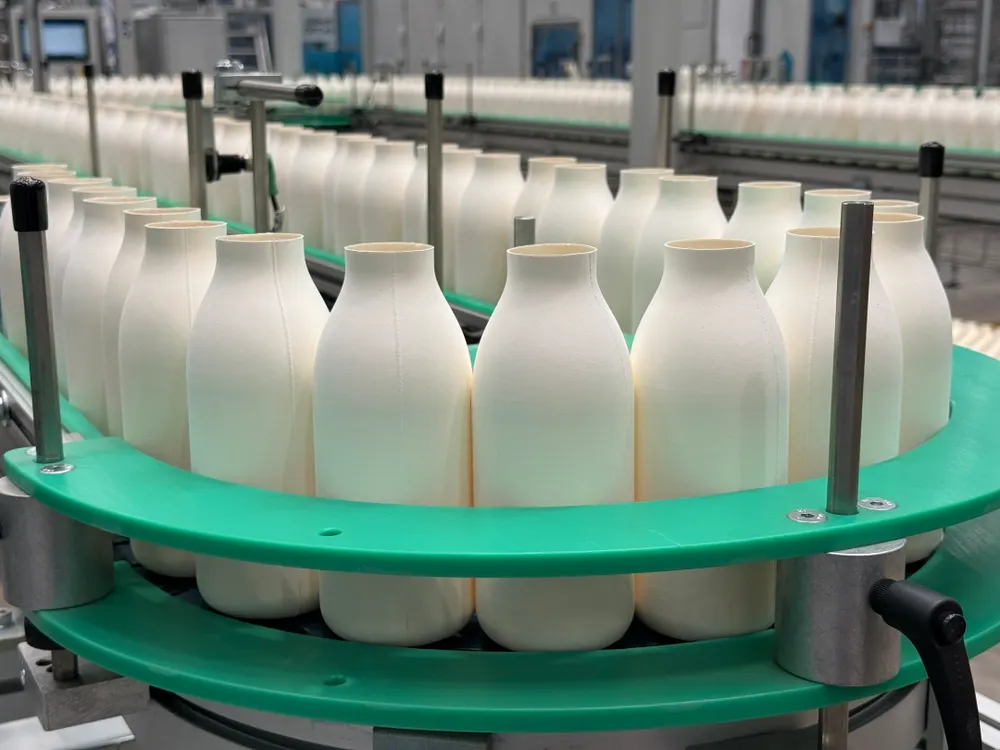
The OrganicUP Consortium is developing biodegradable and recyclable packaging based on SCOBY, an organic by-product of kombucha production. The project combines material development with digital traceability.
Illumination identifies the need to understand and document the material’s origin, composition and transformation into a packaging product.
Measurement translates that priority into information that can connect material sourcing and processing with eco-design testing and the finished product.
Adaptation looks further upstream than in the other two examples. Information about material performance and end-of-life outcomes could inform future packaging design decisions before products are manufactured at scale.
The case illustrates how digital traceability can be considered alongside the development of new materials, helping connect product information with design choices and circularity objectives.
The project should be understood in the context of material research and development, rather than as evidence of a fully established industrial recycling loop.
Different roadmaps from the same analytical process
The three use cases show why a common framework does not have to produce a common data strategy.
For GORD, the priority is relevant environmental information that can support material selection in construction. For CELSA Group, the focus is traceability and the evidence needed to assess material attributes and potential reuse. For OrganicUP, the emphasis is on connecting the origin and development of a new packaging material with product information and future design decisions.
In each case, the DiPPa™ Framework follows the same sequence: identify the strategic priority, determine the evidence required and establish where that information could influence decisions.
For technology providers, this approach offers a way to maintain a consistent implementation process without assuming that every client needs the same passport structure, data fields or roadmap.
From digital records to circular economy decisions
The value of a Digital Product Passport depends not simply on how much data it contains, but on whether that information supports meaningful decisions about products and materials.
Those decisions may involve selecting lower-carbon materials, verifying recycled content, improving traceability or assessing whether a product or component can be reused. The information required will depend on the specific objective and must be supported by appropriate evidence.
The DiPPa™ Framework provides a common analytical process for defining these requirements across different industries. The examples involving GORD, CELSA Group and OrganicUP illustrate how one framework can lead to different roadmaps because the products, stakeholders and opportunities for circularity differ.
As DPP implementation expands, aligning digital infrastructure with these product-specific priorities will be an important part of turning product data into practical value across the supply chain.
The three DiPPa™ Framework canvases — Illumination, Measurement and Adaptation — are available to download free of charge at dippa.eu/framework.
References
- Blue Room Innovation: EPIC-DATA and GORD
- Blue Room Innovation: Circular Steel and CELSA Group
- Blue Room Innovation: OrganicUP
- DiPPa™: Activating Digital Product Passports with the DiPPa™ Framework